New Heights Come Easy For Gorillaz On The Mountain | Album Review
The digital supergroup does it all on their best album in years.

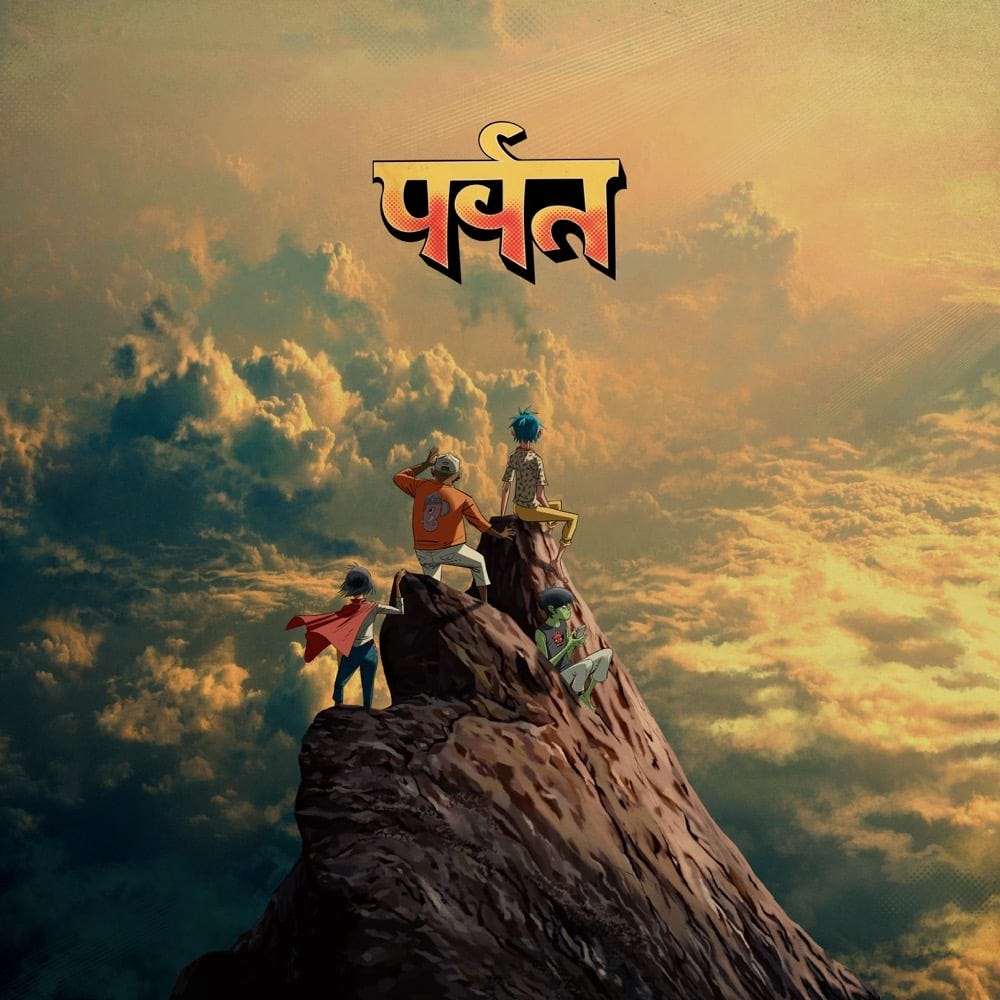
A Gorillaz project is generally going to be a big thing. Going back to the digital band’s debut in 2000, their albums have been filled to the brim with guests and sounds that have made stadiums erupt while reaching chart peaks along the way. So what’s scaling a mountain to Damon Albarn? The Mountain is a fittingly huge title for one of the project’s biggest albums to date, one with a staggering list of guests both new, old, and no longer with us. But where certain Gorillaz projects become overweight with ambition, The Mountain makes its climb gracefully, intermingling Albarn’s sensational pop sensibilities with world music to muse on life, death, and everything in between.
A British musician using Indian music as inspiration is a tale as old as time: think back to The Beatles in the 1960s, and even Ed Sheeran last year. But rather than just taking Indian instruments and slapping his voice over them, Albarn uses it as texture for his pre-existing pop magic. Sitars and more wrap themselves around a sublime synthpop melody on “The Moon Cave”, giving it a life unique from what came before it. The song’s latter half, a rap feature from Black Thought, is classic Demon Days Gorillaz, as are Albarn’s vocals as bandleader 2D. The definition of classic Gorillaz is wide-ranging, though, and there’s plenty of other songs that will remind you of the band’s many eras. “The Happy Dictator” and its banning of all bad news could fit snugly into Cracker Island, while “Damascus” could’ve slid into the Plastic Beach tracklist because, well, it was originally written during that album’s sessions.
The only way using this many sitars, tablas, tanpuras and other Indian instruments is to appreciate the actual history of the music. Albarn recruited a litany of Indian instruments to craft this music the way it should be, and it pays off; the compositions on The Mountain are complicated but not overwhelming, sounding like a fresh take on the many Gorillaz eras we know so well. The smartest choice might have been not making it the focus; since the Indian and world music acts as support, it props up all the other things Albarn has always done well with a fresh new twist. It’s a huge moment to match and Albarn does so swimmingly. His more conventional pop tracks still hit too; “Delirium” takes weirdo pop to its peak, while “The Plastic Guru” gives “Some Kind Of Nature” from Plastic Beach a run for its money.
Albarn and bandmate Jamie Hewlett both lost their fathers during the creation of The Mountain, and the theme of death is everpresent throughout the record. And it’s not just through Albarn’s words, which take simple desires like longing and heartbreak and stretch them well; there are several guests on the record that have been dead for years. Dennis Hopper, Bobby Womack, Tony Allen, Mark E. Smith and more appear from beyond the grave, with unused vocals from previous Gorillaz projects serving as their way back into our ears. It’s admittedly weird, but again, Albarn uses their services with grace and respect. Their absences in his life serve to remind him of what he’s lost and what he’ll never get back, but also what he’ll always appreciate about them: their incredible musical talents and what they taught him. These posthumous features celebrate the fallen rather than use them as cheap vehicles for publicity.
Along with his fallen comrades, Albarn uses several sonic motifs across the album to tie songs together. The Allen tribute “The Hardest Thing” and “Orange County” borrow lyrics from each other, but use them in disparate ways; the former is melancholy in the difficulty of moving on, but those same lyrics make the latter a celebration of those lost. “Orange County” floats with Anoushka Sankar’s sitar and Kara Jackson’s wonderful feature; it’s one of Albarn’s best pop compositions in a long, long time. The highly Indian-influenced title track features rhythms that show up time and again across the album, tying things together nicely on closer “The Sad God”. It’s all a testament to what Albarn has been doing for years now, and he’s learned from mistakes made on Humanz and Cracker Island and making everything come together.
That’s perhaps the most impressive thing about The Mountain: for as big as it is, at over an hour long, it sounds easy. Never do songs labor with implementing the posthumous features, or weaving in new world music sounds; Albarn is always driving forward through whatever sonic fantasy he’s dreamt up. It’s an album that was recorded across five countries and feels like it, full of life and grand successful ambition. It’s Gorillaz’s album since 2020’s Song Machine, Season One: Strange Timez, and it might be their most cohesive project ever. All that while making something totally different than ever before? It’s all about the journey up the mountain, not the destination, but that destination proves very much worth reaching here.
Verdict: 8.5/10
Check out more from Musings On Music: